Abandoned pipelines could release poisons into North Sea
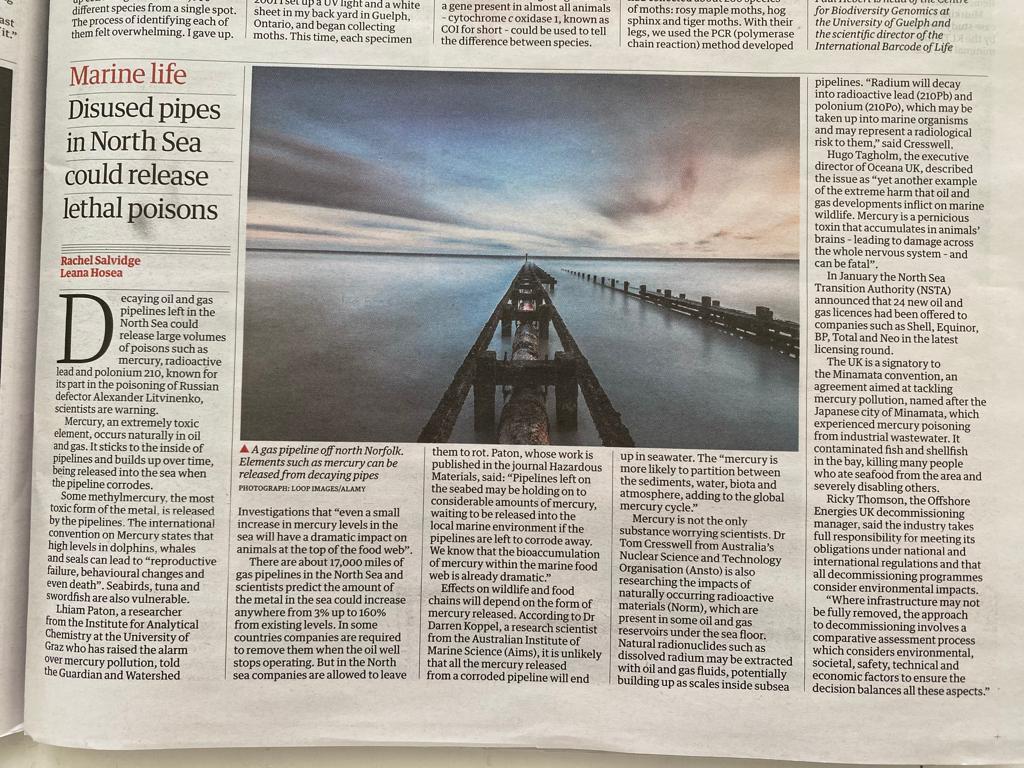
Decaying oil and gas pipelines left to fall apart in the North Sea could release large volumes of poisons such as mercury, radioactive lead and polonium-210.
Independent journalism on water, public health and the environment
WATERSHED partners with national and international media to run high impact investigations covering all issues affecting the freshwater and marine environment.
Decaying oil and gas pipelines left to fall apart in the North Sea could release large volumes of poisons such as mercury, radioactive lead and polonium-210.
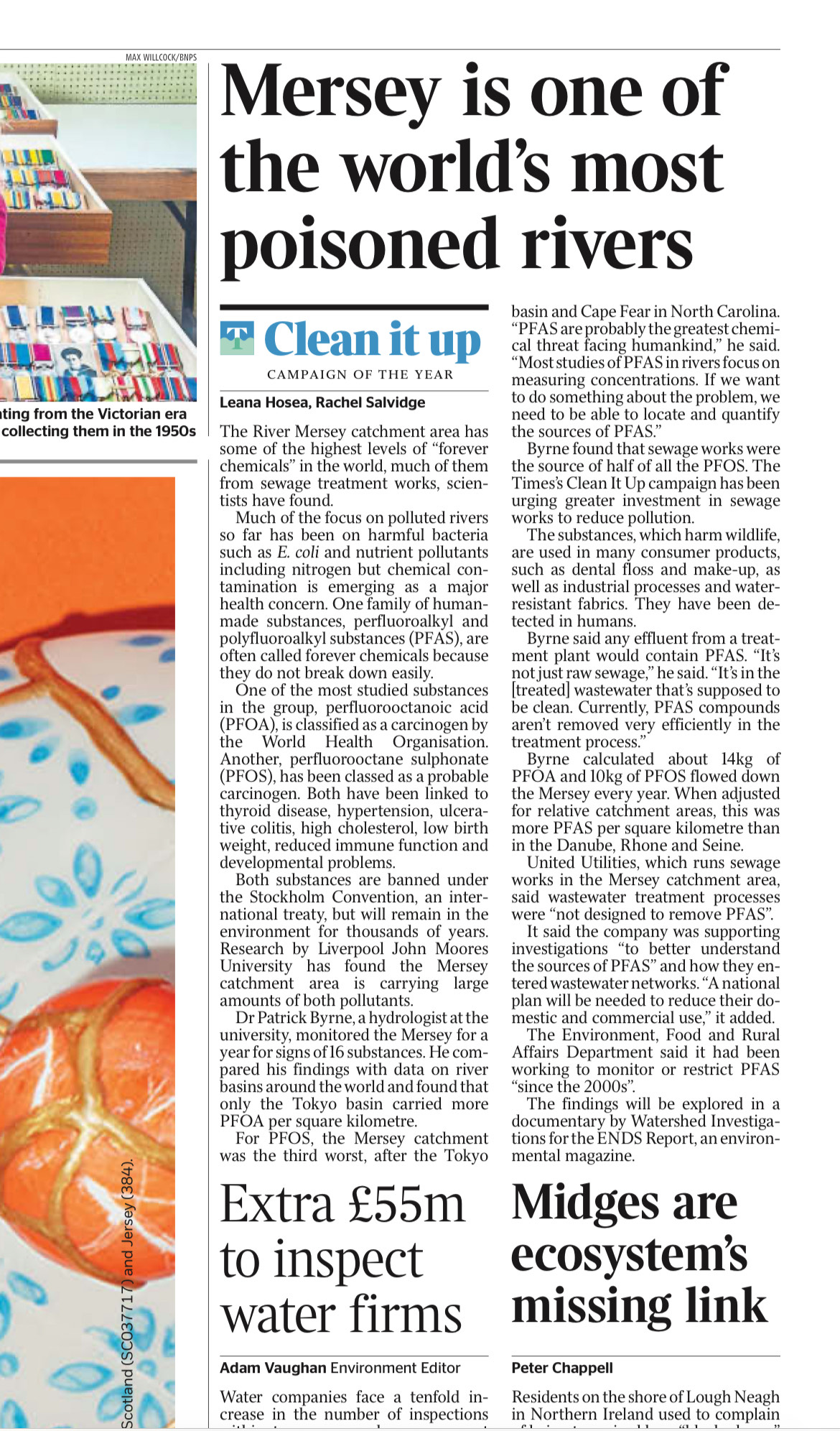
Watershed's article in The Times reports that cancer-causing chemical loads flowing through the River Mersey catchment are among the largest recorded in the world and most of it is coming from sewage works.
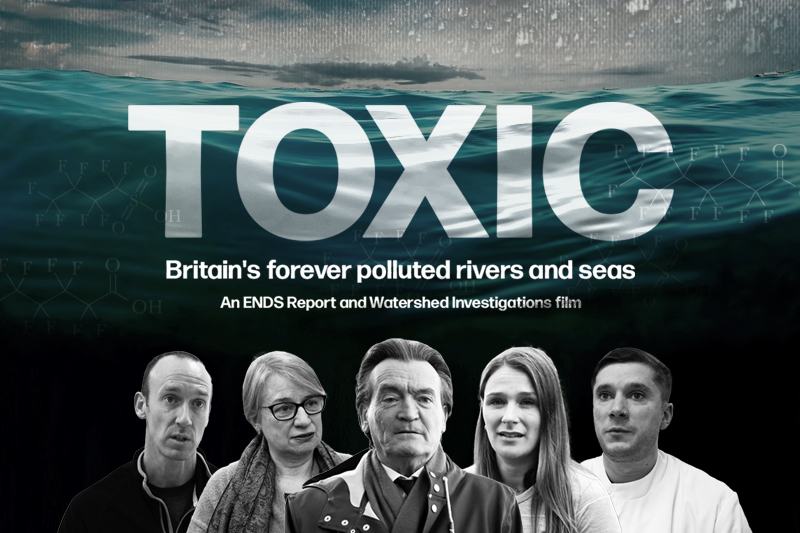
Watershed has worked with the ENDS Report to produce a new film 'TOXIC: Britain's forever poisoned rivers and seas'. The film can be viewed at endsreport.com/toxic and reveals PFAS pollution hotspots across England, particularly in the Mersey and Wyre.
For the Sunday Times, Watershed mapped the demands on the seabed around Britain from energy companies to industrial fishing to conservation, highlighting the need for each of the interests to work together to create a win-win for climate, wildlife and people.
PFAS found in hundreds of drinking water samples across England has been categorised as carcinogenic by the World Health Organisation. The move will increase pressure on the UK government to take action on “forever chemicals”.
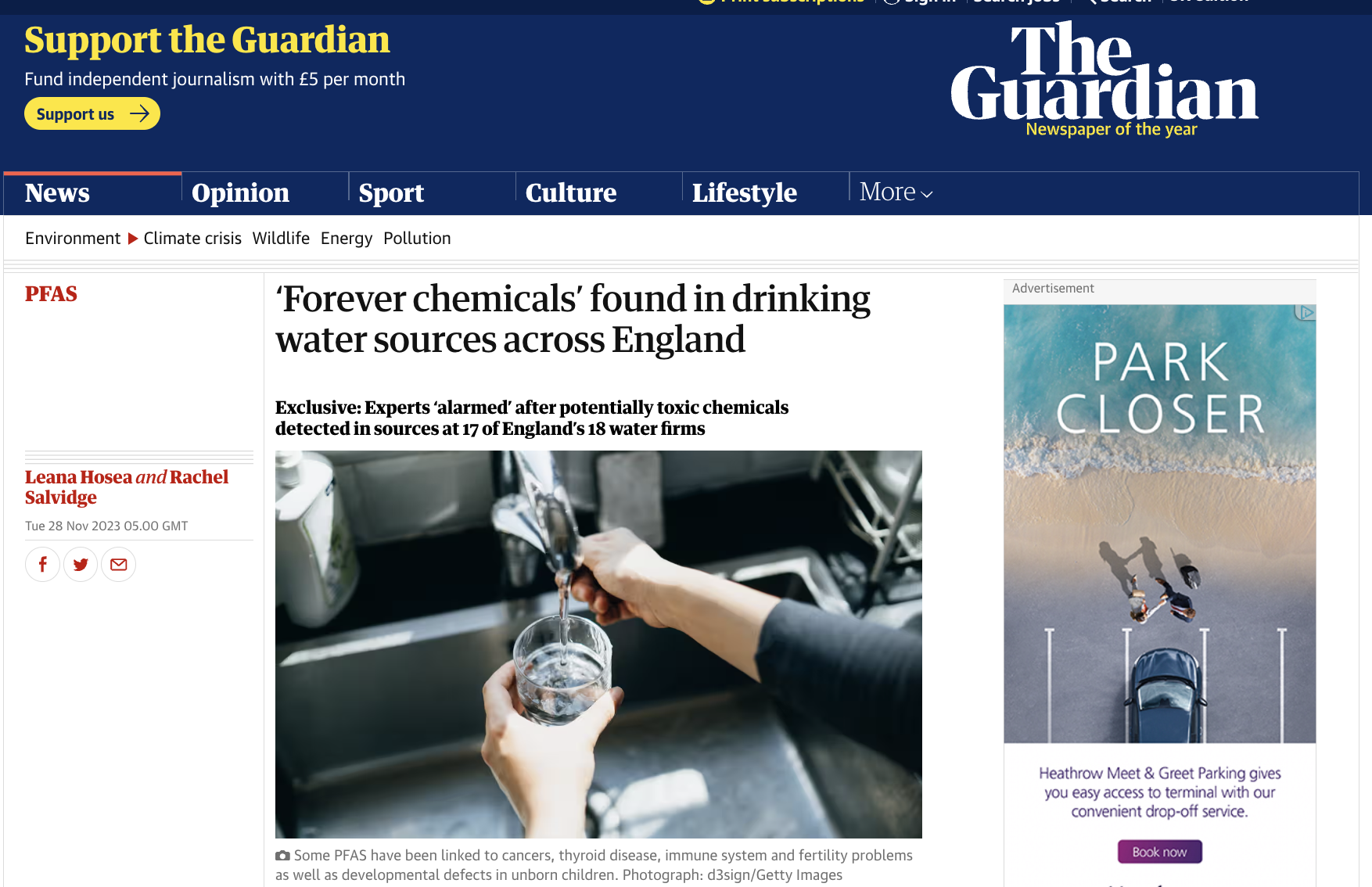
Potentially toxic “forever chemicals” have been detected in the drinking water sources at 17 of 18 England’s water companies, with 11,853 samples testing positive, something experts say they are “extremely alarmed” by.
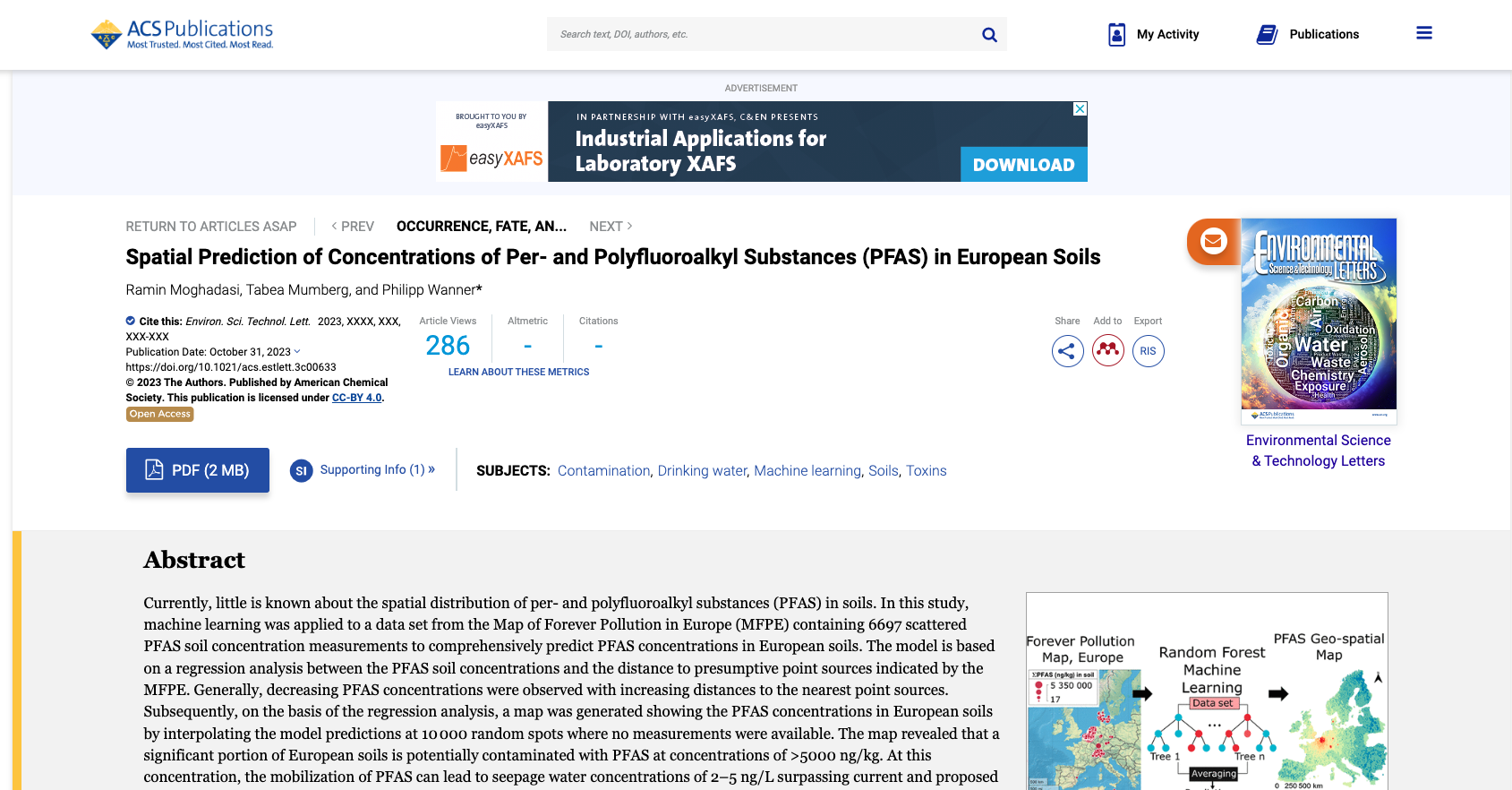
A scientific paper based on the Forever Pollution Project on PFAS was published in the journal Environmental Science and Technology Letters.
Watershed was 'highly commended' at British Journalism Awards, in the organisation's first year of operation.
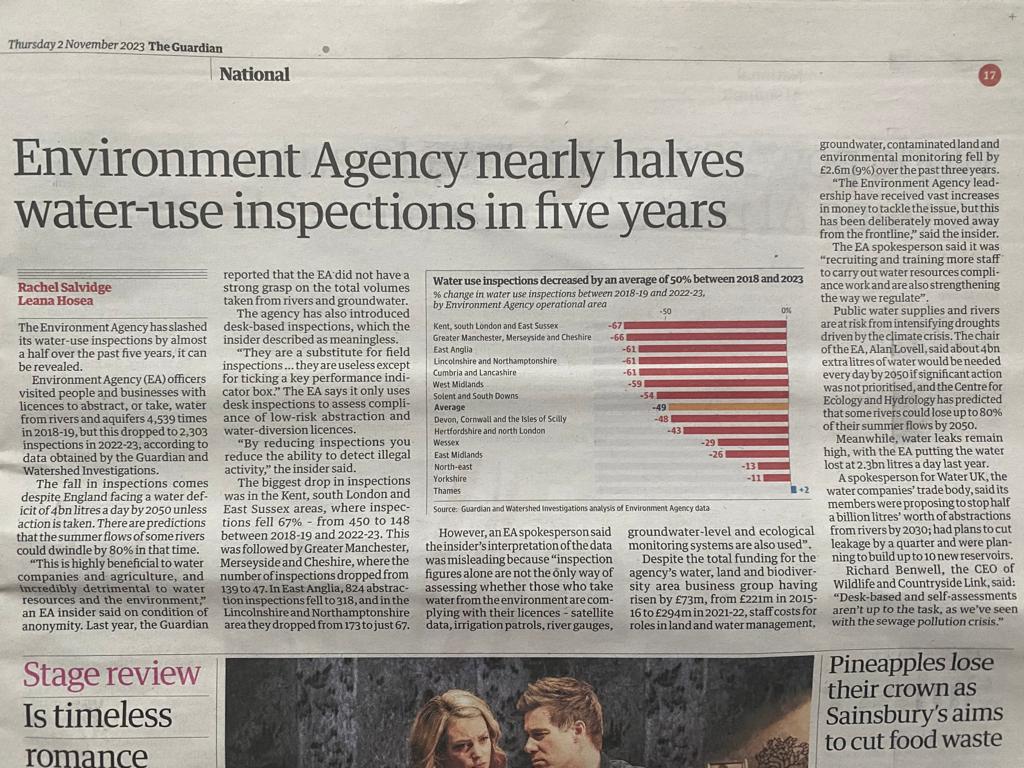
The Environment Agency has slashed its water-use inspections by almost a half over the past five years, according to data obtained by Watershed.
You can help us do more of this work by donating to WATERSHED. We use Gift Aid to help maximise whatever amount you’re able to donate.
Our work has been published in: